


Sandblasting Machines Compared with Other Surface Treatment Equipment: Advantages, Disadvantages, and Applications
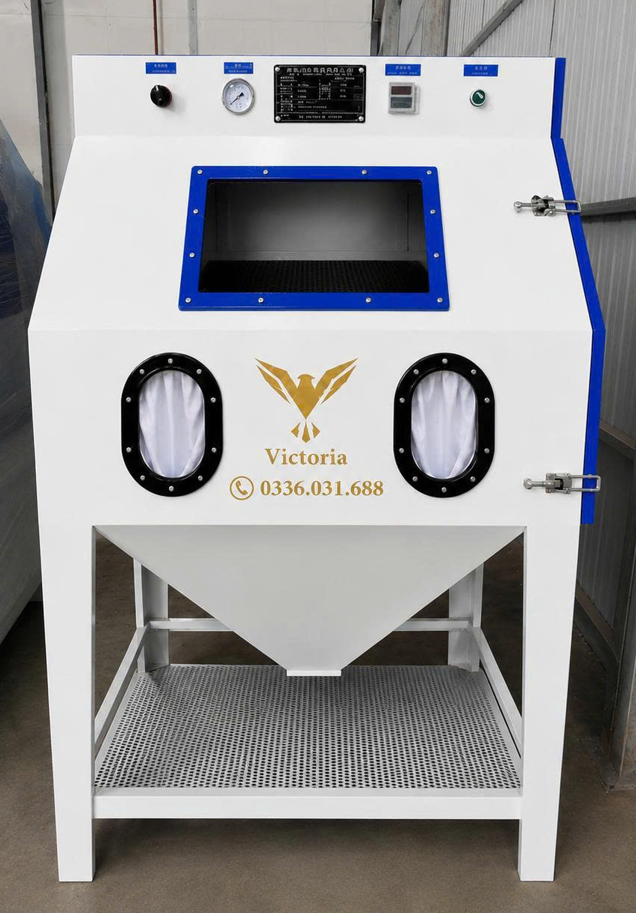
Sandblasting Machines Compared with Other Surface Treatment Equipment: Advantages, Disadvantages, and Applications
In mechanical engineering and industrial manufacturing, surface treatment is an important process for removing rust, old paint, oxides, dust, and other contaminants. Today, businesses can choose from various methods, including sandblasting machines, grinding machines, high-pressure water blasting equipment, chemical cleaning solutions, and shot blasting machines.
Each method has its own advantages. However, sandblasting machines remain widely used due to their fast cleaning performance, excellent surface profiling capability, and versatility across different materials and applications.
1. Key Advantages of Sandblasting Machines
Fast and Powerful Cleaning
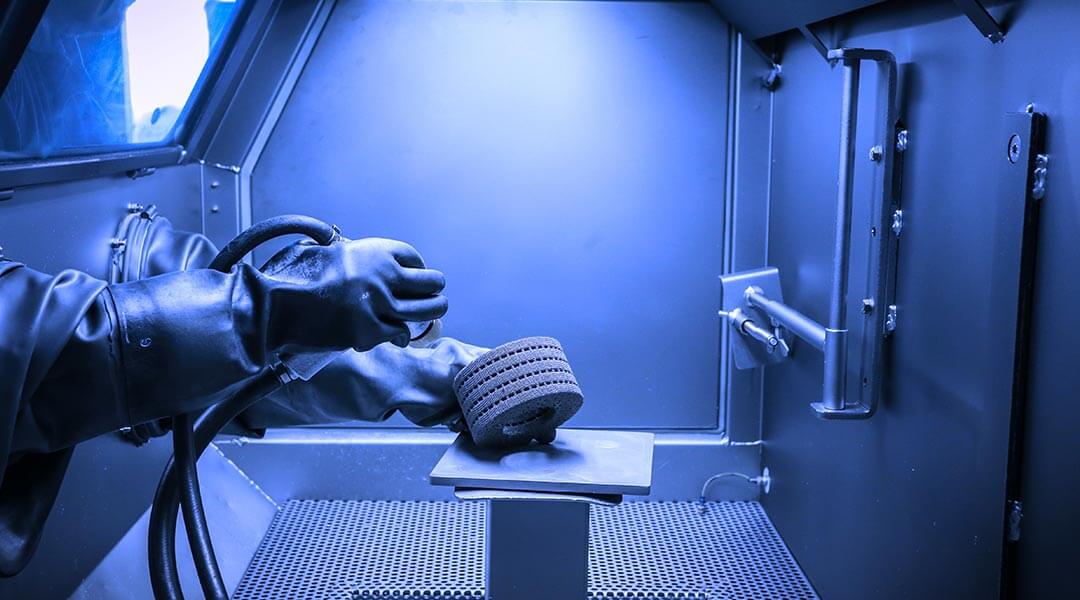
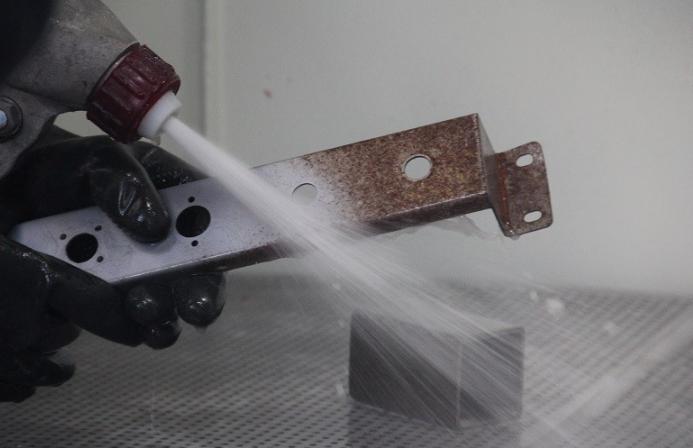
Sandblasting machines use abrasive particles accelerated by compressed air to directly impact the surface. This enables the equipment to quickly remove rust, old paint, oxides, and stubborn surface contaminants.
Compared with steel brushes or manual grinding, sandblasting can effectively treat large areas as well as hard-to-reach locations.
Uniform Surface Roughness
An important advantage of sandblasting is that it not only cleans the surface but also creates an appropriate surface profile.
Suitable surface roughness improves the adhesion of paint and protective coatings, reduces peeling, and contributes to longer product service life.
Suitable for Complex-Shaped Components
Sandblasting machines can treat flat surfaces, edges, grooves, recesses, and components with complex geometries. This is an advantage over some mechanical methods that work more effectively only on easily accessible areas.
Reduced Processing Time and Labor
When sandblasting is incorporated into production processes, surface cleaning can be mechanized, significantly reducing processing time compared with manual methods.
For high-volume workshops, this can increase productivity and optimize operating costs.
2. Disadvantages of Sandblasting Machines
Dust Generation
Dry sandblasting can generate dust from abrasive media and removed surface materials. Therefore, appropriate blasting enclosures, dust extraction and filtration systems, and personal protective equipment are required.
Requires a Compressed Air System
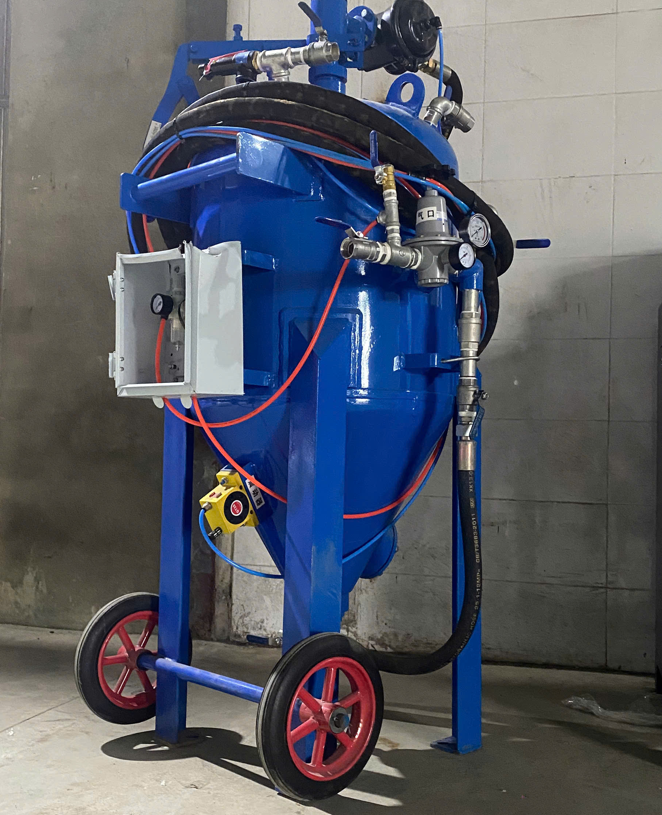
Sandblasting equipment operates using compressed air and therefore requires an air compressor with sufficient capacity and airflow. If the air supply does not meet requirements, blasting performance may decrease.
Abrasive Media Consumption
During operation, abrasive media gradually wears down and needs to be replenished or replaced. Media costs depend on the abrasive type, workpiece size, and frequency of use.
Incorrect Parameters May Affect the Surface
Excessive pressure, unsuitable abrasive media, or prolonged blasting in one area can potentially affect the workpiece surface. Proper parameters and operating techniques are therefore essential.
3. Comparison with Grinding Machines and Mechanical Methods
Grinding machines are easy to use, suitable for small areas, and can quickly remove certain surface layers.
However, grinders can be less effective when treating grooves, corners, recesses, and complex geometries. Grinding may also leave visible marks or alter the surface shape if not performed correctly.
Sandblasting, on the other hand, can reach multiple areas simultaneously and produce a more consistent surface profile.
→ Grinding is suitable for localized treatment, while sandblasting is better suited to larger areas and applications requiring greater surface uniformity.
4. Comparison with High-Pressure Water Blasting
High-pressure water blasting uses pressurized water to remove dirt, mud, paint, and certain contaminants from surfaces.
Its main advantage is reduced dry dust generation. However, when dealing with rust or hard coatings, its ability to create a surface profile differs from abrasive blasting.
Sandblasting has an advantage when both cleaning and surface roughening are required, particularly before painting or protective coating.
5. Comparison with Shot Blasting Machines
Shot blasting also uses abrasive media for surface treatment but is generally designed for workpieces that can be processed within specialized shot blasting chambers or systems.
Sandblasting offers greater flexibility for on-site applications and for products with a wide range of sizes and shapes.
Shot blasting, meanwhile, can achieve high productivity in specialized production lines, particularly when processing workpieces with suitable dimensions and geometries.
6. Comparison with Chemical Treatment
Chemical cleaning agents can be used to remove certain types of paint, grease, oil, or surface deposits. However, chemical processes require strict control of the chemicals used, treatment time, and waste collection procedures.
Sandblasting has an advantage in providing rapid mechanical surface treatment without relying entirely on chemical reactions to remove contaminants.
7. Overall Comparison
| Method | Cleaning | Surface Profiling | Corners & Grooves | Speed | Dust / Waste |
|---|---|---|---|---|---|
| Sandblasting | Excellent | Excellent | Good | High | Dust generated during dry blasting |
| Grinding | Good | Moderate | Limited | Medium | Dust and grinding debris |
| High-Pressure Water Blasting | Good | Limited | Good | High | Wastewater |
| Shot Blasting | Excellent | Good | Equipment-dependent | Very High | Abrasive media |
| Chemical Treatment | Depends on coating | Limited | Good | Medium | Chemical waste |
8. When Should You Choose a Sandblasting Machine?
A sandblasting machine is particularly suitable when a business needs to:
- Quickly remove rust and old paint.
- Create surface roughness before painting or protective coating.
- Treat components with numerous edges, grooves, and complex surfaces.
- Process large quantities of products.
- Reduce processing time and labor compared with manual cleaning.
- Control the required level of surface cleanliness and roughness.
Conclusion
Compared with other surface treatment methods, sandblasting machines offer significant advantages in cleaning speed, surface profiling, and application flexibility. However, they also have specific requirements regarding compressed air, abrasive media, dust control, and occupational safety.
Therefore, equipment should not be selected based solely on power or price. Businesses should consider material type, workpiece dimensions, level of rust or contamination, surface requirements, and production scale to choose the most suitable treatment method, maximize processing efficiency, and optimize investment costs.
Bình luận