


Research on Sandblasting Technology – Modern Solutions for Surface Treatment and Finishing
Research on Sandblasting Technology – Modern Solutions for Surface Treatment and Finishing
1. Overview of Sandblasting Technology
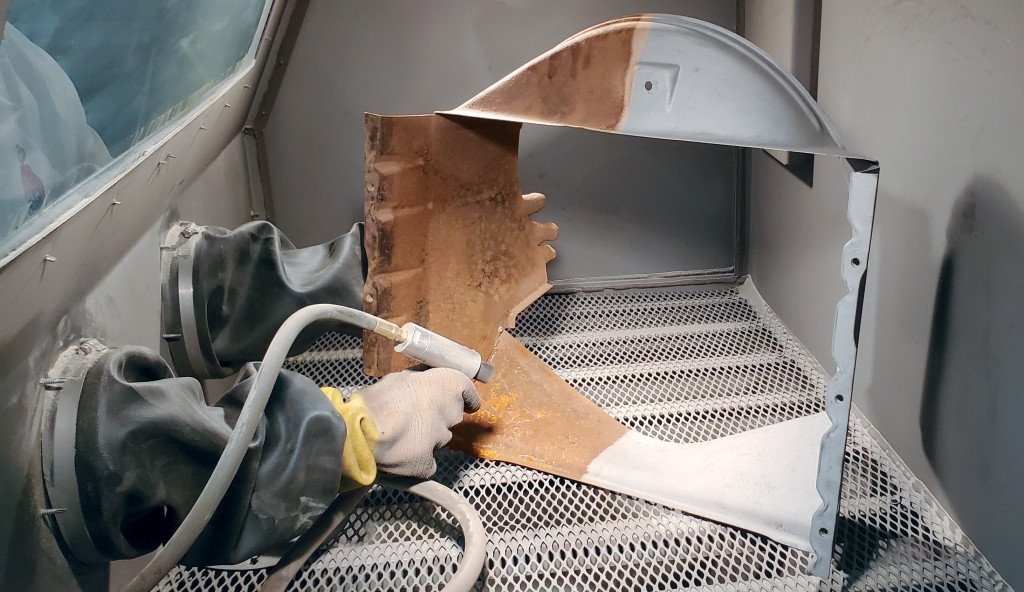
During mechanical manufacturing processes, material surfaces often develop rust, oxide layers, old paint, dust, and other contaminants generated during processing. Therefore, surface treatment is an essential step in ensuring product quality and durability.
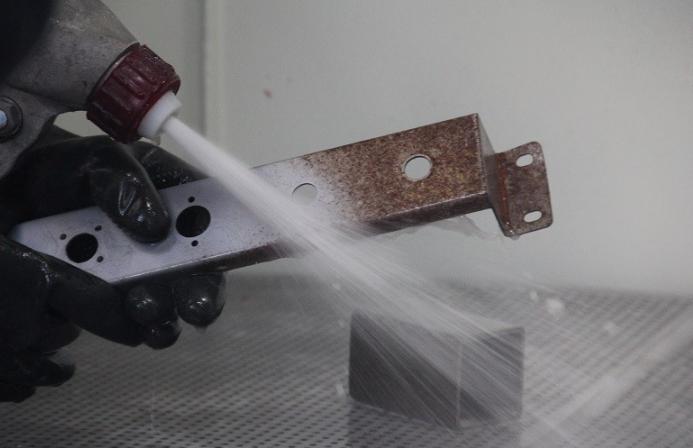
Sandblasting technology has been researched and developed to provide a fast, consistent, and highly controllable surface cleaning method. This technology uses high-pressure compressed air to propel abrasive media onto the surface, effectively removing unwanted deposits and contaminants.
2. Sandblasting Working Principle
The operating principle of sandblasting is based on the impact energy of abrasive particles.
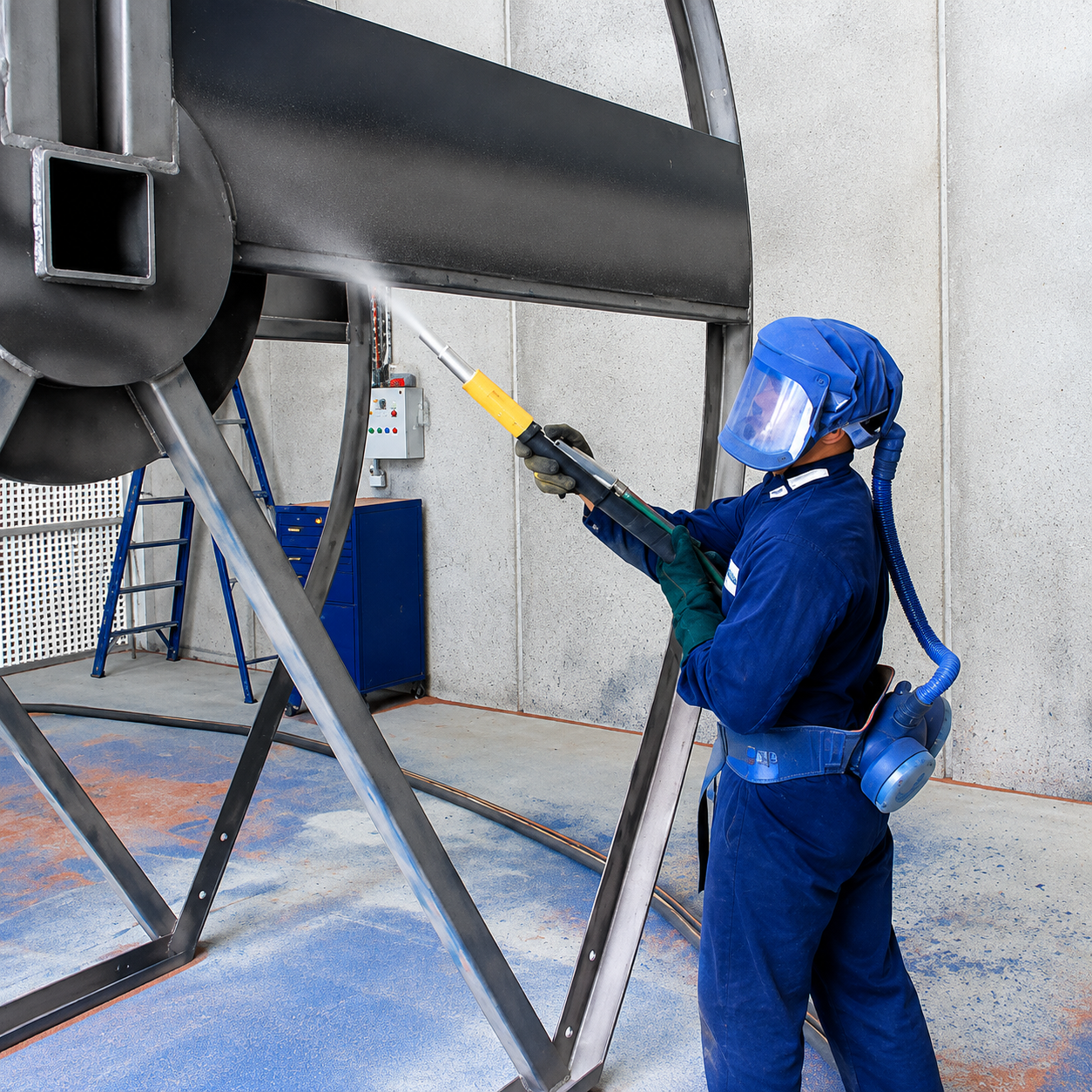
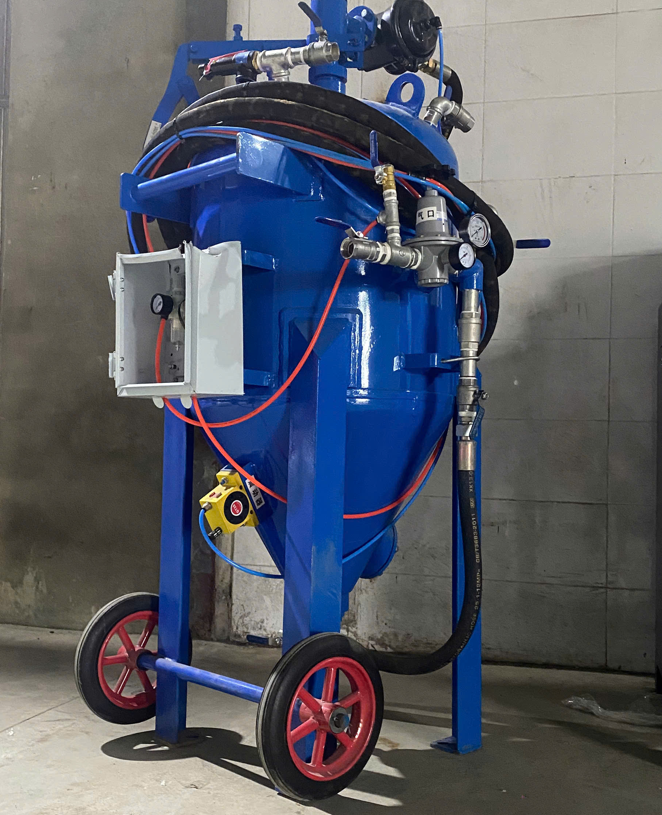
Compressed air generated by an air compressor is delivered to the blasting system. Under pressure, abrasive particles are accelerated and propelled through a nozzle at high velocity. When the particles strike the material surface, their impact and friction remove rust, paint, oxides, and other contaminants.
The treatment level depends on several factors, including:
- Compressed air pressure.
- Type and size of abrasive media.
- Distance between the nozzle and workpiece.
- Blasting angle.
- Treatment time.
- Properties of the material being treated.
Research and precise control of these parameters help achieve the required surface cleanliness and roughness for different production applications.
3. Research on Abrasive Materials
One of the key areas in sandblasting technology research is the selection of abrasive media.
Depending on the application, materials such as steel shot, steel grit, aluminum oxide, glass beads, and other specialized abrasives can be selected. Each type has different hardness, particle size, and surface impact characteristics.
For example, high-hardness abrasives are generally suitable for removing heavy rust or hard coatings, while lighter abrasives can be used for surfaces requiring gentler treatment.
Selecting the appropriate abrasive not only improves cleaning efficiency but also helps reduce media consumption and minimize the risk of damaging or deforming the workpiece surface.
4. Surface Roughness Control
In addition to cleaning, sandblasting technology is also studied to achieve the appropriate surface roughness.
Surface roughness plays an important role in painting, plating, and protective coating processes. A properly prepared surface provides better coating adhesion, thereby improving durability and resistance to peeling.
Therefore, in industrial manufacturing, the goal of sandblasting is not simply to clean the surface but also to create the appropriate surface condition for subsequent processes.
5. Improving Efficiency and Automation
Current research trends focus on increasing productivity and improving process control. Modern equipment can incorporate abrasive recovery systems, dust filtration systems, and pressure adjustment mechanisms to ensure more stable operation.
In large-scale production lines, sandblasting technology can also be integrated with rotary mechanisms, sliding tables, robotic systems, or automated control systems. This reduces dependence on manual operations and provides greater consistency across products.
6. Practical Applications
After continuous research and development, sandblasting technology is now widely applied in various industries, including:
- Mechanical manufacturing and engineering.
- Machine component cleaning.
- Steel structure treatment.
- Machinery and spare parts restoration.
- Mold cleaning.
- Surface preparation before painting.
- Automotive and motorcycle industries.
- Metal product cleaning in industrial manufacturing.
In particular, for businesses processing large quantities of components within short timeframes, sandblasting can help increase productivity and achieve greater product consistency.
7. Future Development Trends
Future research into sandblasting technology will increasingly focus on automation, abrasive efficiency, dust control, and improved processing accuracy.
Modern blasting systems are increasingly designed to optimize abrasive consumption, improve recovery and reuse, and enhance dust filtration systems to create a safer and cleaner working environment.
In addition, the application of sensors and intelligent control systems can enable monitoring of air pressure, abrasive flow rate, and processing time, thereby improving the stability and consistency of the entire process.
Conclusion
Research into sandblasting technology goes beyond surface cleaning. It also focuses on controlling surface roughness, improving coating quality, reducing operating costs, and automating production processes.
With its wide range of applications in mechanical engineering and industrial manufacturing, sandblasting continues to be an important solution for surface treatment and finishing, particularly as demands for productivity, quality, and manufacturing consistency continue to increase.
Bình luận